

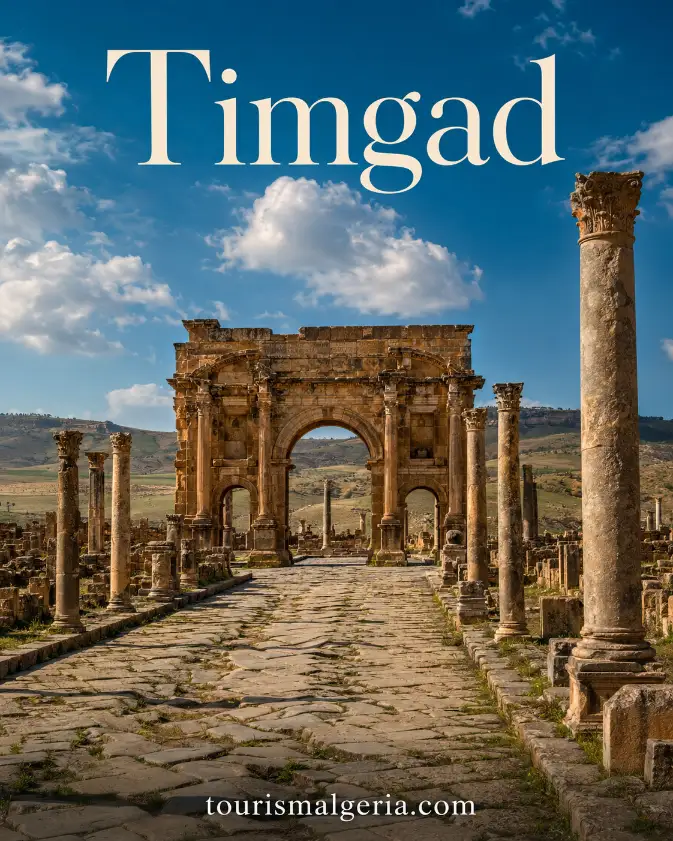
Timgad Roman Ruins in Algeria: Ancient City of the Aurès
The ruins of Timgad in Algeria are the remains of an ancient Roman city, founded by Emperor Trajan around AD 100 on the northern slopes of the Aurès Mountains, and preserved today as one of North Africa’s clearest examples of Roman urban planning.
Why Timgad Is Important
Timgad is important because it shows how Roman engineers created a planned colonial city from scratch, using a strict grid layout based on the cardo and decumanus, the two main perpendicular streets that organised movement, public buildings and daily life.
Where the Ruins Are Located
The archaeological site is located in Batna Province, in eastern Algeria, making it especially relevant for travellers visiting Batna, Constantine, the Aurès region or other Roman heritage sites in the east of the country.
What Visitors Can See in Timgad
Visitors can walk through stone-paved streets, columns, public squares, baths, houses, markets, religious remains, a theatre, a library area and the famous Arch of Trajan, which is one of the most recognisable monuments of the site.
Timgad and Roman Town Planning
The city is often described as a remarkable model of Roman town planning because its streets, blocks and public spaces still reveal the original urban order, allowing visitors to understand how a Roman colonial settlement was structured.
The Arch of Trajan
The Arch of Trajan is the most photographed monument in Timgad, standing as a symbolic entrance and visual landmark within the ruins, surrounded by columns, stone roads and the remains of buildings that once formed the ancient city.
Timgad as a UNESCO World Heritage Site
Timgad is listed by UNESCO as a World Heritage Site, recognised for its Roman planning, historical value and preserved urban structure, making it one of Algeria’s most important archaeological tourism destinations.
Best Time to Visit the Ruins
The best time to visit Timgad is usually during milder seasons, especially spring or autumn, because the site is wide, open and exposed, so walking through the ruins can be more comfortable outside the strongest summer heat.
How Long to Spend in Timgad
A good visit to Timgad can take several hours, especially if travellers want to walk through the main streets, see the theatre, explore the forum area, photograph the arch and understand the scale of the ancient Roman city.
Practical Travel Base
Batna is the most practical base for visiting Timgad, while Constantine can also be used as part of a wider eastern Algeria itinerary combining bridges, Roman heritage, mountain landscapes and cultural tourism.
Why Timgad Is Called a Roman Treasure of Algeria
Timgad is often considered one of Algeria’s greatest Roman treasures because it combines scale, preservation, mountain setting and architectural clarity, giving visitors a rare opportunity to walk through the skeleton of a complete ancient city.
Main Highlights of the Timgad Ruins
- Arch of Trajan
The monumental arch is the signature landmark of Timgad and one of the most impressive surviving Roman structures at the site. - Roman Theatre
The theatre shows how entertainment, public gathering and urban culture formed part of daily life in the ancient city. - Forum Area
The forum was the civic heart of Timgad, where public, commercial and political life would have been concentrated. - Cardo and Decumanus Streets
These two main Roman roads reveal the city’s grid plan and help visitors understand its organised urban design. - Public Baths
The bath remains show the importance of social life, hygiene and leisure in Roman urban culture. - Ancient Library Area
Timgad is known for remains associated with a Roman library, which adds cultural importance beyond military and architectural history. - Markets and Shops
The remains of commercial spaces help visitors imagine how trade and daily economic life worked in the ancient settlement. - Residential Quarters
House foundations and street blocks show how ordinary inhabitants lived within the planned structure of the city. - Religious Remains
Temples and later Christian structures reflect the changing spiritual and cultural history of the city over several centuries. - Wide Archaeological Landscape
The open setting makes Timgad especially impressive, because visitors can see the scale of the city and its relationship with the Aurès landscape.