


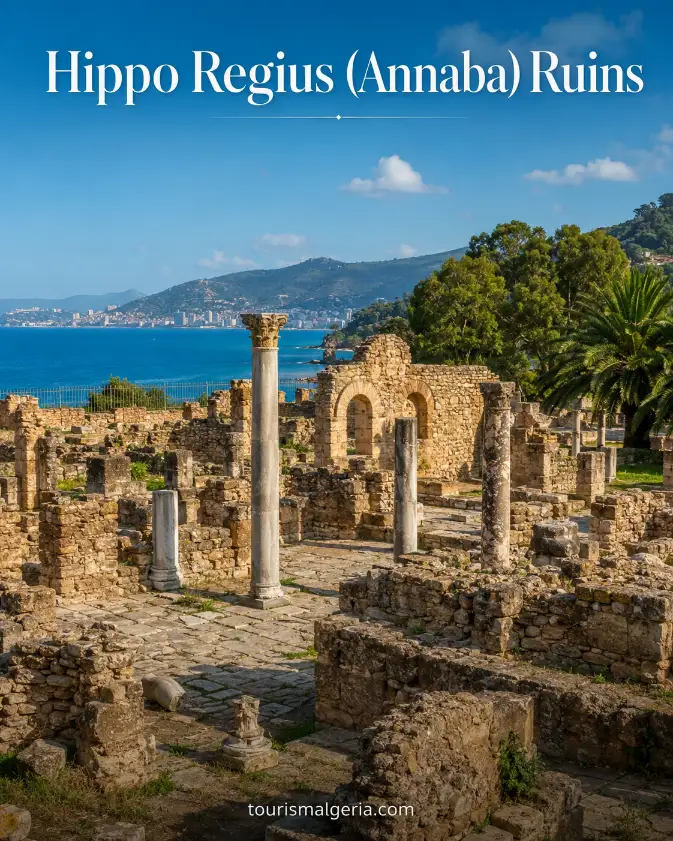
Visit Hippo Regius Roman Ruins in Annaba
Hippo Regius Roman ruins in Annaba are the remains of the ancient city of Hippo, an important North African settlement linked to Phoenician, Numidian, Roman, Vandal and early Christian history, located near modern Annaba in eastern Algeria.
Why Visit Hippo Regius
A visit to Hippo Regius is useful for travellers who want to discover Roman Algeria through a coastal archaeological site connected not only to urban ruins, but also to Saint Augustine, early Christianity and the ancient history of Annaba.
Where Hippo Regius Is Located
Hippo Regius is located in Annaba Province, close to the modern city of Annaba, making it one of the most practical Roman archaeological sites to visit for travellers staying on Algeria’s eastern Mediterranean coast.
Hippo Regius and Ancient Annaba
Hippo Regius, also called Hippone in French contexts, was the ancient name associated with modern Annaba and became one of the important cities of Roman Africa before later historical phases transformed its religious and political role.
Saint Augustine and Hippo
Hippo Regius is especially famous because Saint Augustine lived there as bishop from 391 to 430, making the ruins important not only for Roman archaeology but also for Christian intellectual and religious history.
A Site Overlooked by the Basilica of Saint Augustine
The archaeological area is visually linked to the Basilica of Saint Augustine, which overlooks the ruins and reinforces the connection between Annaba, ancient Hippo and the memory of one of North Africa’s most influential historical figures.
What Visitors Can See at Hippo Regius
Visitors can explore remains of streets, forum areas, baths, basilica structures, market spaces, columns, mosaics, residential traces and museum collections, giving a varied view of daily life, public space and religious history in ancient Hippo.
Forum, Streets and Public Buildings
The forum and street remains help visitors understand how the ancient city was organised, while the surviving stone structures show the scale of a Roman urban settlement that once played a major role in the region.
Baths, Houses and Museum Collections
The baths and private-house remains show the social and domestic side of Roman life, while the museum displays archaeological objects, statues and mosaics connected to the site’s public buildings and residences.
Christian Heritage at Hippo Regius
The Christian remains are central to the identity of Hippo Regius because they connect the ruins with Augustine’s episcopal life, preaching, writing and the broader religious history of late antique North Africa.
Hippo Regius as a Visit from Annaba
Hippo Regius is one of the best cultural visits from Annaba because it can be combined with the Basilica of Saint Augustine, the city centre, the Corniche, beaches, seafood restaurants and wider eastern Algerian heritage routes.
Best Time to Visit Hippo Regius
The best time to visit is usually morning or late afternoon, especially in spring or autumn, because the site is open, exposed and easier to enjoy when temperatures are moderate and light conditions are better for photography.
How Long to Spend at the Site
A good visit can take one to two hours, but travellers interested in Augustine, mosaics, archaeology and photography should allow more time to explore the museum, ruins, basilica views and the wider historical setting.
Practical Travel Tips
Visitors should wear comfortable shoes, bring water, check local opening conditions, allow time for the museum, avoid the hottest hours and combine the ruins with the Basilica of Saint Augustine for a more complete heritage experience.
Main Highlights of Hippo Regius Roman Ruins
- Ancient City of Hippo
The ruins preserve the memory of ancient Hippo, one of the important cities associated with Roman and late antique North Africa. - Saint Augustine Connection
Hippo Regius is strongly linked to Saint Augustine, who lived there as bishop and became one of the most influential thinkers in Christian history. - Forum Area
The forum remains help visitors imagine the civic, commercial and social centre of the ancient city. - Roman Baths
The bath remains show the role of hygiene, leisure and social gathering in the daily life of Roman Hippo. - Ancient Streets
The surviving streets help travellers follow the layout of the old settlement and understand how movement was organised. - Basilica Remains
The Christian basilica remains add an important religious layer to the archaeological visit. - Museum of Hippone
The museum is worth including because it contains mosaics, statues and archaeological pieces found in and around the site. - View Toward Saint Augustine Basilica
The modern basilica overlooking the ruins gives the visit a strong visual and symbolic connection between ancient Hippo and later religious memory. - Annaba Heritage Route
Hippo Regius fits naturally into an Annaba itinerary combining archaeology, coastal scenery, religious heritage and Mediterranean city life. - Quiet Roman Site in Eastern Algeria
The site is ideal for travellers who want a less crowded but historically rich Roman ruin near a major Algerian coastal city.
How to Use This Page Before Visiting Hippo Regius
Travellers should use this guide to plan transport from Annaba, choose the right time of day, prepare for walking, include the museum, visit the Basilica of Saint Augustine and understand why Hippo Regius is one of Algeria’s most meaningful archaeological sites.