

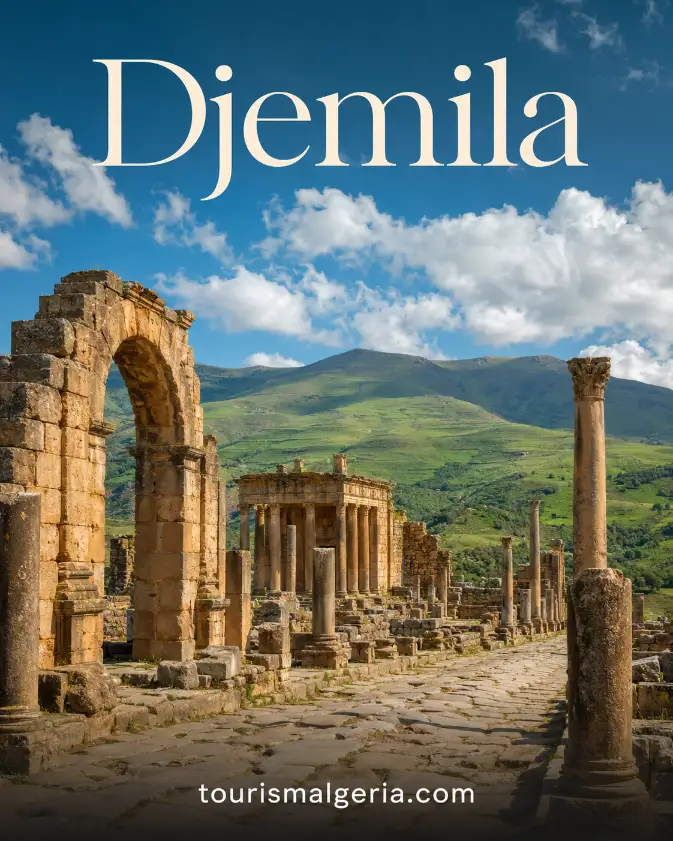
Djemila Roman Ruins in Algeria: Ancient Cuicul in the Mountains
The ruins of Djemila in Algeria are the remains of the ancient Roman city of Cuicul, a mountain settlement founded during the reign of Emperor Nerva and today recognised as a UNESCO World Heritage Site.
Why Djemila Is Important
Djemila is important because it shows how Roman architecture and town planning were adapted to a difficult mountain location, creating a city with forums, temples, basilicas, triumphal arches, houses and public spaces shaped by the terrain.
Where the Ruins Are Located
The archaeological site of Djemila is located about 50 kilometres north-east of Sétif, making it a major heritage excursion for travellers visiting Sétif, Constantine, eastern Algeria or the Roman archaeological routes of the country.
Djemila and Its Ancient Name Cuicul
Before becoming known as Djemila, the city was called Cuicul, an ancient Roman colony established in a highland setting where civic buildings, religious monuments, markets and residential quarters gradually developed around the needs of Roman urban life.
Roman Architecture in a Mountain Landscape
Unlike a flat Roman city such as Timgad, Djemila is especially interesting because its streets and buildings follow the constraints of hills, slopes and rocky ground, giving the site a dramatic visual character surrounded by green highland scenery.
The UNESCO Value of Djemila
UNESCO recognises Djemila for its outstanding Roman remains and for the way the ancient city illustrates Roman town planning adapted to a mountain environment, making it one of Algeria’s most important archaeological destinations.
What Visitors Can See in Djemila
Visitors can see stone streets, columns, temples, basilicas, houses, arches, markets, baths, a theatre and museum collections, with many remains still arranged in a way that helps travellers understand the structure of the ancient city.
The Theatre of Djemila
The Roman theatre is one of the major monuments of Djemila, showing the role of public entertainment, civic gathering and cultural life in ancient Cuicul, while also offering a strong visual impression of the site’s preserved architecture.
Forums, Temples and Public Squares
Djemila contains important civic and religious spaces, including forum areas, temples and monumental structures that reveal how political, commercial, religious and social life was organised in a Roman city built far from the Mediterranean coast.
The Arch of Caracalla
The Arch of Caracalla is one of the most recognisable monuments at Djemila, adding a triumphal and imperial dimension to the site and giving visitors a strong photographic landmark within the wider Roman urban landscape.
Djemila Museum and Mosaics
The Djemila museum is important because the site is known for remarkable mosaics and archaeological objects, helping visitors understand the artistic, domestic and religious life of the ancient city beyond the stone ruins themselves.
Best Time to Visit Djemila
The best time to visit Djemila is usually spring or autumn, when the mountain climate is more comfortable for walking, photography and exploring open-air ruins without the strongest summer heat or difficult weather conditions.
How Long to Spend at the Site
A proper visit can take several hours, especially if travellers want to explore the theatre, forum areas, temple remains, arches, streets, museum and viewpoints rather than making only a quick stop during a regional journey.
Practical Travel Base for Djemila
Sétif is the most practical base for visiting Djemila, while Constantine can also be included in a wider itinerary combining Roman ruins, bridges, museums, city heritage and eastern Algerian landscapes.
Main Highlights of the Djemila Ruins
- Roman Theatre
The theatre is one of the most impressive structures at Djemila and helps visitors imagine public performances, gatherings and entertainment in ancient Cuicul. - Arch of Caracalla
This monumental arch is a key landmark of the site and one of the most photographed Roman remains in Djemila. - Forum Areas
The forum spaces show the civic heart of the ancient city, where public, political and commercial activity would have taken place. - Temples and Religious Buildings
The temples and later religious structures reveal the changing spiritual history of the city across Roman and Christian periods. - Basilicas
The basilicas of Djemila show the architectural and religious development of the site as the city evolved over several centuries. - Roman Streets
The stone streets help visitors follow the ancient urban plan and understand how movement was organised across the mountain settlement. - Residential Quarters
The remains of houses and domestic spaces show how inhabitants lived inside a Roman city adapted to local geography. - Public Baths
The bath remains illustrate the importance of hygiene, leisure and social life in Roman urban culture. - Mosaics and Museum Collections
The mosaics are among the major cultural attractions of Djemila and help complete the visitor experience beyond the outdoor ruins. - Mountain Setting
The surrounding hills make Djemila especially memorable, because the ruins are not only historic but also visually dramatic in their natural landscape.
Algeria trip planer 3 days, 5 days, 7 days
Hotels Comparator in Algeria
Algiers-Kasbah english speaking guide
Algeria Ferries
Algerie Car Rental
Sahara Desert Hotels in Algeria
Algeria Visa Application
Casbah of Algiers
Algiers Church of Notre-Dame d’Afrique
Makam El Chahid
Timgad
Djemila
Tipaza Roman Ruins
Royal Mausoleum of Mauritania
Tiddis
Hippo Regius (Annaba) ruins
Lambaesis
Qal’a of Beni Hammad